Skin Cancer
Benign Skin Conditions
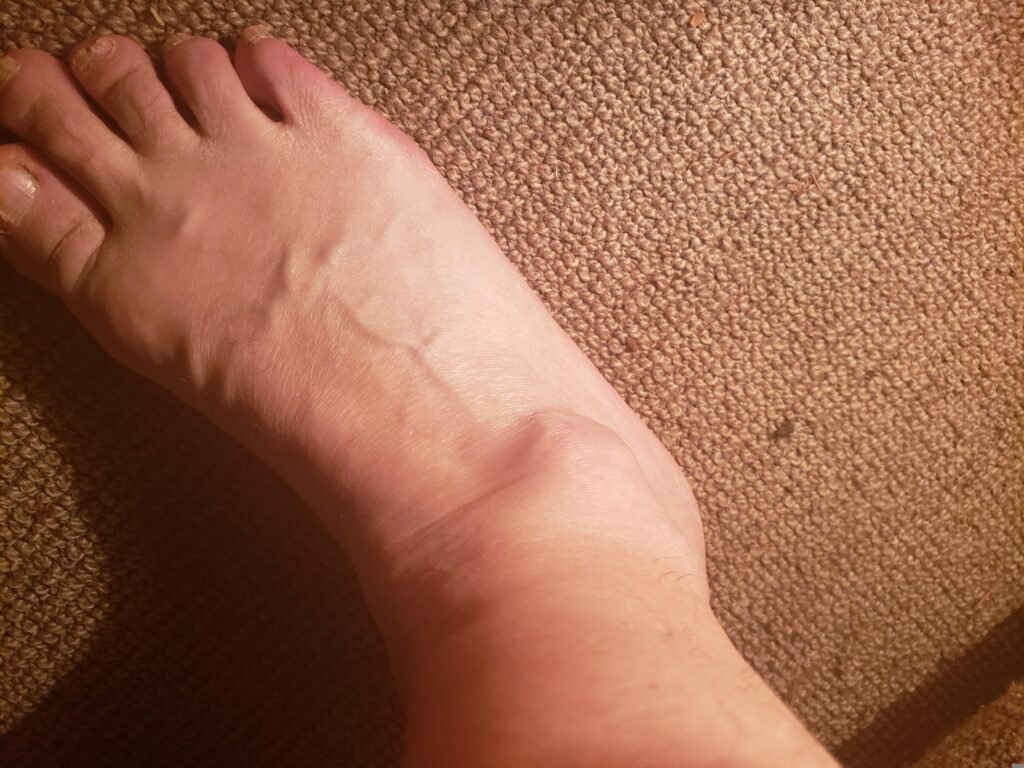
Benign skin growths encompass various non-cancerous lesions that can appear on the skin. Two common types of benign skin growths are lipomas and cysts:
Lipomas
Lipomas are soft, fatty lumps that develop under the skin. They are typically slow-growing and painless, and they commonly occur on the neck, shoulders, back, abdomen, or arms. Lipomas are usually harmless and do not require treatment unless they cause discomfort or affect appearance. Surgical removal may be considered for cosmetic reasons or if the lipoma becomes bothersome.

Cysts
Cysts are sac-like structures filled with fluid, pus, or other materials that can form beneath the skin. They may result from blocked hair follicles, infection, or other factors. Cysts can appear anywhere on the body and vary in size. While most cysts are benign and harmless, they may become inflamed, infected, or cause discomfort. Treatment options for cysts include drainage, surgical excision, or injections to reduce inflammation.
Cancerous Skin Conditions
Melanoma
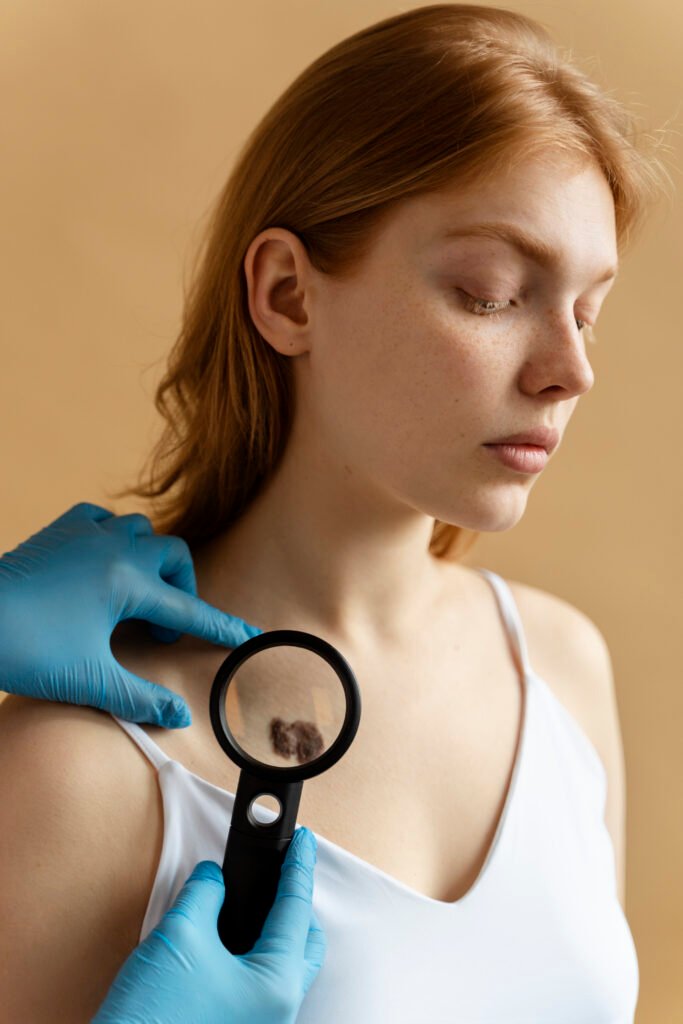
Melanoma is a type of skin cancer that develops from melanocytes, the pigment-producing cells in the skin. It is often characterized by the formation of malignant tumours, which can arise from moles or appear as new pigmented growths on the skin. Melanoma is known for its potential to spread rapidly to other parts of the body, making early detection and treatment crucial for favourable outcomes. Risk factors for melanoma include excessive sun exposure, a history of sunburns, having numerous moles, fair skin, and a family history of the disease. Regular skin examinations and self-checks are important for detecting melanoma in its early stages when it is most treatable. Treatment options for melanoma may include surgical removal of the tumour, chemotherapy, immunotherapy, targeted therapy, and radiation therapy, depending on the stage and extent of the cancer. Early diagnosis and prompt treatment significantly improve the prognosis for individuals with melanoma.

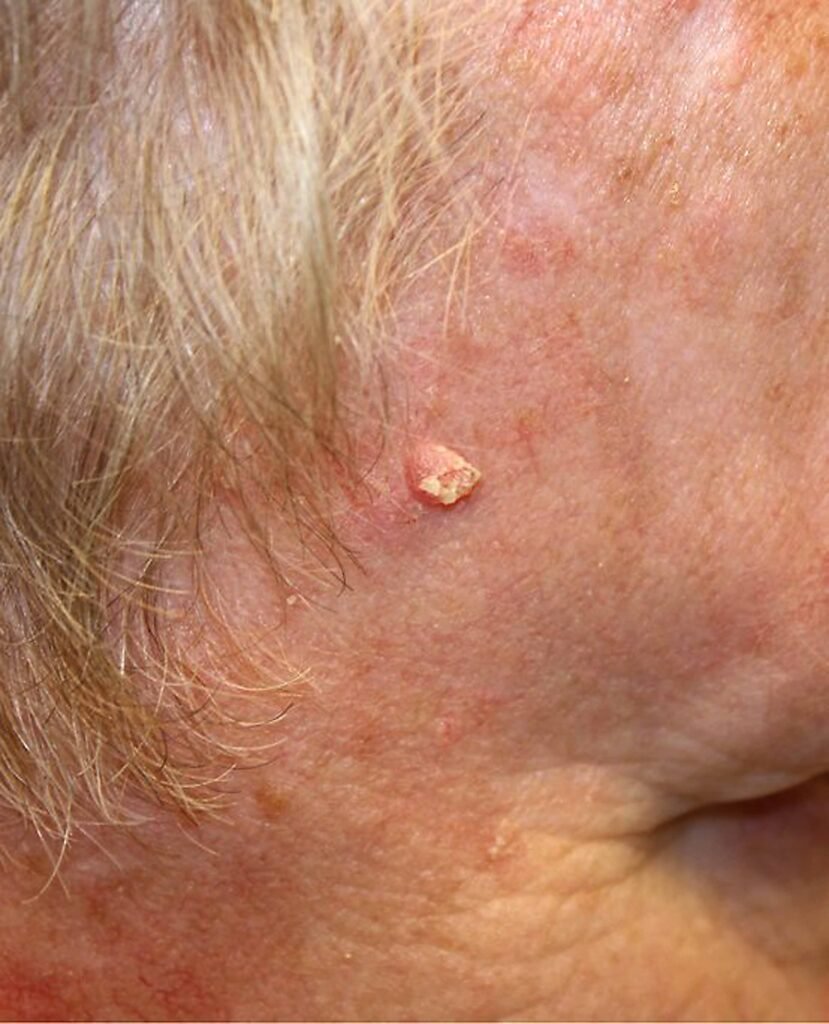
Nonmelanoma skin cancer encompasses various types of skin malignancies, excluding melanoma, which is the most well-known but less common form. Types of nonmelanoma skin cancer include basal cell carcinoma, squamous cell carcinoma, and Merkel cell carcinoma. Among these, basal cell carcinoma and squamous cell carcinoma are the most prevalent types of skin cancer.
Nonmelanoma skin cancer staging involves assessing the tumour to determine its size and extent of growth within the skin (T), whether it has spread to nearby lymph nodes (N), and if it has metastasized to other parts of the skin or organs (M). This staging process helps to evaluate the cancer’s severity, likelihood of spreading or recurring after treatment, and guides decisions regarding appropriate therapy.
Treatment Options for Nonmelanoma Skin Cancer
Various treatment modalities are available for managing skin cancer, contingent upon its subtype and stage:
- Surgery: Surgery represents the primary approach for treating skin cancers. Two common surgical techniques include:
- Wide excision: The surgeon removes the tumour along with a surrounding margin of 3 to 10 millimetres of healthy tissue. Specimens are sent to a pathology laboratory for microscopic evaluation, determining the extent of cancer presence.
- Mohs surgery: This technique involves removing the tumour along with a narrow margin of 1 to 2 millimetres of normal tissue, with immediate microscopic examination in a laboratory to ensure complete tumour removal.
- Local Destruction: For early-stage cancers, localized treatments may be employed:
- Cryotherapy: Liquid nitrogen is used to freeze and destroy cancerous cells.
- Electrodesiccation and curettage: The cancerous tissue is scraped off, and an electric current is applied to destroy remaining cancer cells.
- Carbon dioxide laser: Laser therapy targets and destroys tumour cells.
Medication and Other Treatments: Certain topical medications and therapies are effective for early-stage cancers and precancerous lesions:
fluorouracil cream: A chemotherapy agent that eliminates rapidly dividing cancer cells.
Imiquimod cream: An immune stimulant that enhances the immune system’s response to cancer cells.
Photodynamic therapy: Tumour cells are treated with a photosensitizing medication and then exposed to specific wavelengths of light, inducing cell death.
Systemic Therapies: In cases where skin cancer is more advanced or widespread, systemic treatments may be necessary:
Chemotherapy: Medications are administered orally or intravenously to target cancer cells throughout the body.
Targeted therapy: Drugs are designed to specifically target the characteristics of skin tumors, inhibiting their growth and spread while minimizing damage to normal cells.
Immunotherapy: This approach harnesses the body’s immune system to recognize and attack cancer cells.
Each treatment option is tailored to the individual patient’s specific diagnosis and medical needs, with the goal of achieving optimal outcomes while minimizing side effects.
Treatment Options for Nonmelanoma Skin Cancer
Basal Cell Carcinoma
Basal Cell Carcinoma, also referred to as basal cell cancer, stands as the most prevalent form of skin cancer, constituting 80% of nonmelanoma skin cancers. Originating from keratinocytes, cells found in the epidermis, basal cell carcinoma typically presents as small, raised, shiny, or pearly lesions, although its appearance can vary. Primarily emerging in sun-exposed areas like the face, head, neck, arms, and hands, this cancer tends to progress slowly and infrequently metastasizes to distant sites.
While basal cell carcinoma rarely spreads beyond the skin, if left untreated, it can infiltrate deeper tissues, potentially affecting bone and causing disfigurement. Moreover, individuals with this type of cancer face an elevated risk of developing additional basal cell carcinomas and other skin cancer types elsewhere on their skin.
Fortunately, basal cell carcinomas are typically slow-growing and can often be effectively managed through lesion removal. The five-year survival rate for patients with basal cell carcinoma is estimated to be close to 100%, owing to its low metastatic potential. However, due to the possibility of recurrence, regular follow-up with a physician is advisable.

Squamous Cell Carcinoma
Squamous Cell Carcinoma (SCC) typically originates in sun-exposed areas of the skin, akin to basal cell carcinoma, such as the face, head, neck, arms, and hands. However, it can also arise in other regions, including the genital area.
The appearance of SCC tumors varies, often manifesting as rough or scaly red to pink patches on the skin. However, they can also present as crusted or non-healing sores or thickened, wart-like lesions.
As the second most common type of skin cancer, SCC develops from keratinocytes in the epidermis. Notably, when SCC occurs in the genital area, it is frequently associated with human papillomavirus (HPV) infection.
Unlike basal cell carcinoma, SCC has a greater propensity to grow and metastasize to other parts of the body, although this occurrence is still relatively rare. Most cases are detected early and can be effectively treated, but staging may be necessary for patients with risk factors, such as a compromised immune system, which increases the likelihood of spread.
When SCC is diagnosed early, the five-year survival rate is approximately 99%. However, for patients with advanced-stage SCC at the time of diagnosis, the survival rate may be lower.
Merkel Cell Carcinoma
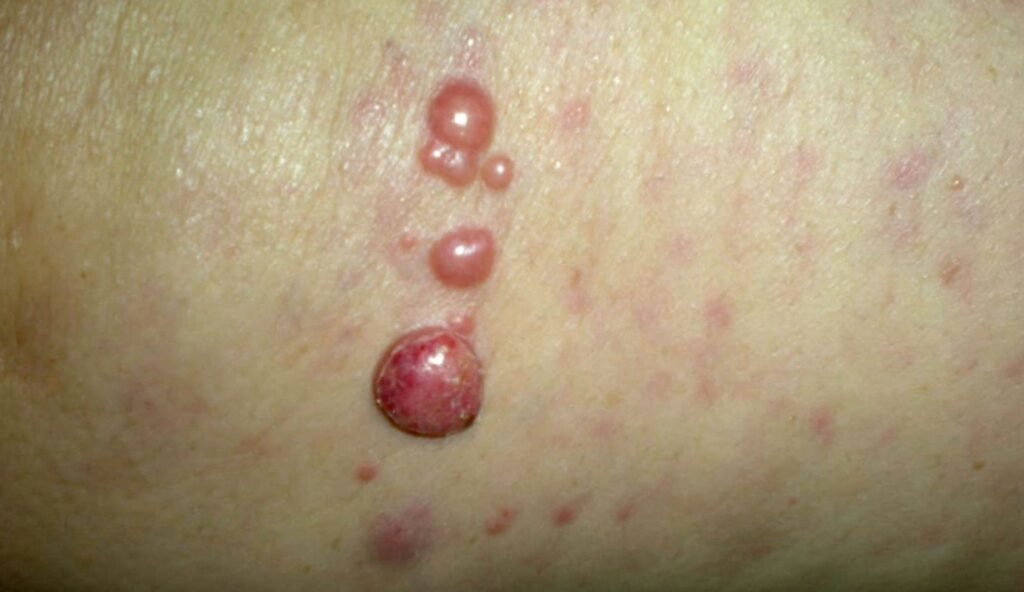
Merkel cell carcinoma is an uncommon form of skin cancer that can develop on any part of the body, although it predominantly occurs on sun-exposed areas like the face, neck, and arms. Typically, it presents as firm, shiny lumps on the skin that are painless. These lumps may have varying colors such as red, pink, or blue, and they have the potential to grow rapidly. If Merkel cell carcinoma spreads beyond the skin, it can pose challenges in treatment.
Dermatofibrosarcoma protuberans
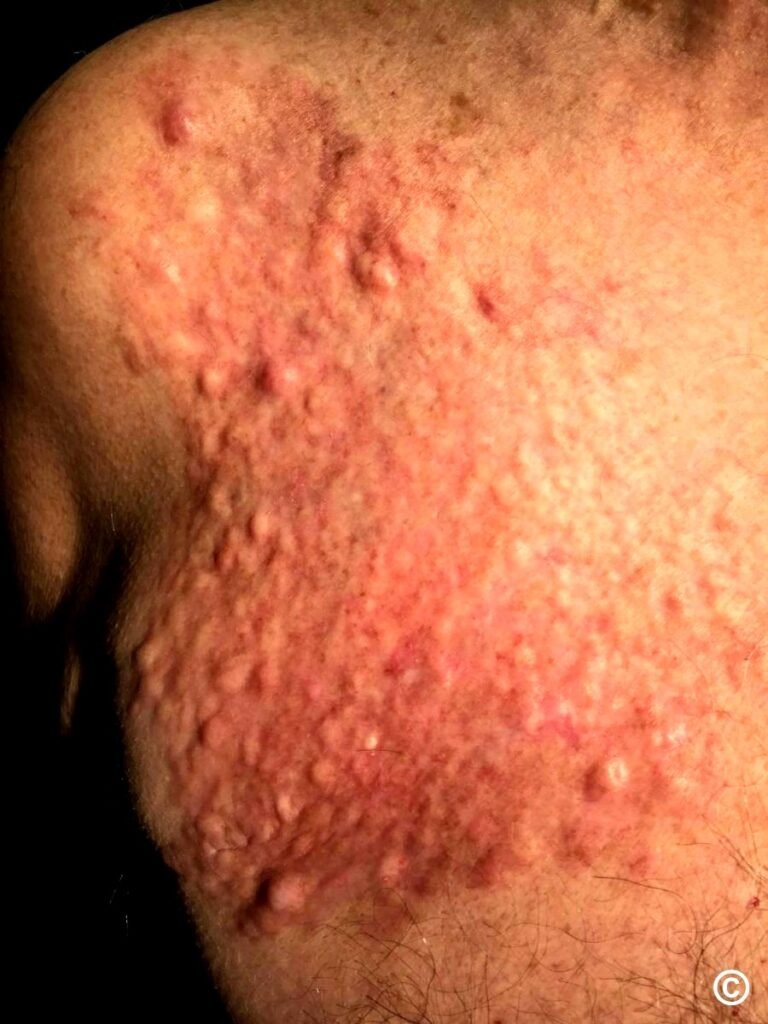
Dermatofibrosarcoma protuberans (DFSP) is a rare type of soft tissue sarcoma that originates in the deep layers of the skin. It typically arises from the dermis, the layer of skin beneath the epidermis. DFSP often appears as a painless, firm, raised mass or nodule on the skin, which may grow slowly over time. While DFSP is considered a low-grade malignancy and tends to grow locally without spreading to distant organs, it can invade surrounding tissues and may recur if not completely removed during surgical excision. Treatment for DFSP usually involves surgical removal of the tumor with wide margins to ensure complete eradication. In some cases, additional therapies such as radiation therapy or targeted therapy may be recommended, particularly for tumors that cannot be completely excised or have recurred. Regular follow-up is essential to monitor for any signs of recurrence or metastasis. Despite its low metastatic potential, DFSP requires careful management due to its tendency for local recurrence if not adequately treated.
Eccrine (sweat gland) malignancies
Eccrine gland malignancies, also known as eccrine sweat gland carcinomas, are rare cancers that originate from the eccrine sweat glands, which are responsible for regulating body temperature by producing sweat. These malignancies can arise in various areas of the body where eccrine glands are present, including the palms, soles, and axilla (armpit).
Eccrine gland malignancies can manifest in different forms, such as adenocarcinomas or spiradenocarcinomas, and they often present as painless, slow-growing nodules or masses on the skin. Due to their rarity and variable presentation, diagnosis can be challenging, and they are often mistaken for benign skin conditions.
Treatment for eccrine gland malignancies typically involves surgical removal of the tumor with wide margins to ensure complete excision. In some cases, additional therapies such as radiation therapy or chemotherapy may be recommended, particularly for tumors that have metastasized or cannot be completely removed surgically.
Prognosis for eccrine gland malignancies depends on various factors, including the tumor size, location, and extent of spread. Early detection and treatment are crucial for improving outcomes, as these malignancies can be aggressive and have the potential to metastasize to other parts of the body. Regular follow-up and monitoring are essential to detect any signs of recurrence or metastasis.